• Skip to primary navigation
  • Skip to main content
Text reads "Palmer Animal Hospital" in large maroon letters, with four navy blue paw prints in each corner of the image. The background is white.

Palmer Animal Hospital

Veterinarian Myersville, MD

  • Home
  • Services
  • About
    • About Us
    • Veterinarians & Staff
    • South Mountain Standard Poodles
    • Testimonials
  • Forms
    • Client Registration Form
    • Sick Patient History Questionnaire
    • Questionnaire for Annual Well Pet Visits
  • News
  • After Hours
  • Contact Us
  • Pet Record Portal

admin

Flea and Tick Month

October 7, 2013 by admin

‘FLEA AND TICK MONTH’  

October is known to be the worst flea month.  As the weather starts to become cold, the indoor fleas activate and seem to appear when the heat in our home kicks on.  Fleas can be very frustrating to eliminate, especially when they get out of control.  They live on your pet, in the house, and outside. It is estimated that for every flea on your pet there are 100 or more in your house.  This is why early treatment should be considered.  To get rid of these parasites, treating your pet(s),  your house, and often the outdoors, is a must!

For your pet, several once-a-month products are available which are both convenient and effective such as;

–Comfortis– A monthly oral product that does a great job and quickly gets a problem under control.  Note: it does not treat ticks!

– Frontline and Advantage/Advantix– Topical insecticides that kill fleas on your pet for a whole month. Frontline Plus is our recommended product because it also blocks flea eggs and kills ticks.

   Eliminating fleas in your house is the most important part of the treatment as well.  To start , you need to thoroughly vacuum the entire house, especially carpeted areas.    You need to use a product that kills not only adult fleas, but also blocks the development of eggs and larvae such as Siphotrol Premise Spray.  Siphotrol is a direct spray that is applied to every inch of flooring.   The  treatment needs to be repeated in one month to kill the newly-hatched pupae (a stage of the flea that no product can kill).  If frequent treatment was not sufficient, it may be neccessary to then treat the outdoor areas where your pet frequents.


Please feel free to give us a call if you have any questions on how to get rid of these pests.
 

Filed Under: News

World Rabies Day

September 27, 2013 by admin

WORLD RABIES DAY

   September 28 is ‘World Rabies Day’, and it’s goal is to raise global awareness of rabies prevention and control measures. Human rabies is  uncommon in the United States, so it is easy to forget the impact rabies could have on us.  Thankfully, today we have a strong rabies prevention and control programs available, but remember that more than 55,000 people die from rabies each year in Asia and Africa.

   This year, Maryland had its first case of human rabies since 1976, and this was actually contracted through an organ transplant.  Through the end of August, there have been 284 rabies cases in Maryland, and approximately 400 animals are confirmed rabid in our state each year.   Approximately 1,000 Maryland residents that have recieved rabies post-exposure prophylaxis annually because of exposure to a rabid animal.  In our own Frederick County, there  are usually between 40 to 80 cases of rabies in animals each year.   The most common species involved are racoons and bats, but there are also cases reported in groundhogs, rabbits, horses, and even cats.  (NOTE:  it has luckily been sometime since a case of canine rabies has occured in Maryland.)    

   So what can you do to reduce you (and your pets) risk of this fatal disease?  Of course vaccination if the cornerstone of rabies prevention.   Rabies vaccinations are legally required for all cats and dogs (in Frederick County and in Maryland), and are given every 1-3 years.    It is very important to keep your pet up-to-date.   Human vaccination is also available for persons that are exposed or are at risk of exposure.

    Please feel free to give us a call to check on your pet’s vaccination status. 


Filed Under: News

Canine Influenza Reported in Montgomery County

September 18, 2013 by admin

CANINE INFLUENZA REPORTED IN MONTGOMERY COUNTY

In early September, twenty-two cases of Canine Influenza were reported in Montgomery County, MD.  Two of the dogs died from their infections.    Canine Influenza has been a known canine pathogen since 2004,  but while highly infectious, it’s incident rate has remained low.   Most cases show mild signs with coughing, lethargy, and nasal discharge.    Much like human influenza,  some cases develop more severe signs such as  fever and pneumonia, and can lead to death.    The occurance of these recent cases locally has brought attention back to this disease.

    So, what do you need to do to protect your pet?   Risk factors for contracting Canine Influenza are very much the same as those for Kennel Cough—that is environments where your dog will be exposed to  where multiple dogs gather, such as boarding kennels, animal shelters, dog parks, grooming facilities, and veterinary clinics.    There is a vaccine available for Canine Influenza, and some boarding kennels and veterinary clinics are already requiring it.     Currently, we are not requiring the vaccine at Palmer Animal Hospital, but are offering it as an option.  If more cases of Influenza continue to be reported, widespread use of the vaccine will likely be required.  

     If you have any questions about your dog’s risk for Canine Influenza, please feel free to give us a call!

Filed Under: News

Medication Shortages

July 19, 2012 by admin

One of the most frustrating challenges we have dealt with over the past few years is the increasing incidence of medication shortages/backorders.    This year has seemed especially bad as medications we have used for a long time just suddenly vanish from the supply chain.    Currently we are dealing with these shortages:

     —Interceptor — our preferred Heartworm Prenventative disappeared this past winter and has not yet become available again.   We are using Heartgard Plus in it’s place, and we hope to have Interceptor back in stock this fall

      —Phenobarbitol — this commonly used anti-convulsive has offered an inexpensive medication to manage seizures in our epileptic patients.   Earlier this month, we were informed that the price of Phenobarbitol had drastically increased, and once our current stock is dispensed, clients can expect the price of prescriptions to markedly increase (5-10 fold is possible) .   We have been switching some of our patients over to Zonisamide for other reasons, and now the newer medication will have approximately the same cost as Phenobarb.

Filed Under: News

New Phone Book

December 13, 2011 by admin

    As the new phone book comes out this month, many of you may notice that we no longer have our usual block ad in the “Veterinarian” section.   It isn’t that we are going anywhere, but it was getting to the point that the cost of the phone book ad just didn’t make sense anymore.   We will still have a line listing, but with so many other online sources, we felt it was best to concentrate our advertizing dollars elsewhere (such as our website, on-hold messaging, etc).  

   NOTE:  Google is currently listing an incorrect phone number for us  (301-971-3333, and we had nothing to do with making the listing).   We have contacted Google multiple times to no avail, so if you come across this number, please send Google a note that it is STILL wrong.  It just goes to show you that you can’t believe everything you read online!

Filed Under: News

World Oldest Dog Dies

December 13, 2011 by admin

Last week it was reported that the world’s oldest (documented) dog died at the age of 26.  Pusuke was a mixed breed dog that lived in Japan.    His owner said he was eating well and active until last Monday when Pusuke became lethargic and had trouble breathing.   Pusuke later passed peacefully just moments after his owner returned from a walk.

     The oldest known dog (according to Guiness) was an Australian Shepherd named Bluey who lived to the ripe old age of 29 years 5 months before being euthanized in November 1939.

Filed Under: News

HOLIDAY HOURS

November 21, 2011 by admin

Here is the Holiday Schedule at Palmer Animal Hospital:

THANKSGIVING

Thursday, Nov 24, 2011 —Thanksgiving Day   —   CLOSED

Friday, Nov 25, 2011  — 8AM-5PM (regular hours)

Saturday, Nov 26, 2011 — 8AM-Noon (regular hours)

CHRISTMAS

Saturday, Dec 24, 2011 — CHRISTMAS EVE —    8AM-Noon:  Staff only, no appointments

Sunday, Dec 25, 2011 —    CHRISTMAS DAY —    CLOSED

Monday, Dec 26, 2011 —   8AM-8PM (regular hours)

NEW YEAR’S

Saturday, Dec 31, 2011 — NEW YEAR’S EVE —   8AM-Noon (regular hours)

Sunday, Jan 1, 2012 —    NEW YEAR’S DAY —    CLOSED

Monday, Jan 2, 201 — 8AM-8PM (regular hours)


Filed Under: News

INCLEMENT WEATHER POLICY

October 29, 2011 by admin

     Wow, we’re not even out of October and the snow is here.  Now is a good time to review our Inclement Weather Policy.   While it is rare for us (or at least most of us) to make it into the office, I tell my staff that if there is any question as to whether they can SAFELY make it into work, to stay home and call the office to see what the situation is weather-wise.    So on those days when you wake up with the ground covered in white (like it was at my house on top of South Mountain this morning), the best advice I can give our clients is to CALL THE OFFICE BEFORE YOU COME IN.  Staff is usually in at 7:30, so if you don’t get a live person please leave a message and we will call you back.     There are also rare occassions when the daytime weather becomes so nasty that we will close early.   In those cases we contact all of our appointments and in-house cases to let them know the status.  If you can’t make it in to pickup your pet, don’t worry—we can hold onto them until it is safe to pick them up.

Filed Under: News

Willow the Cat’s Journey to NYC Spurs Interest in Microchips

September 19, 2011 by admin

Willow, the cat, disappeared in Colorado and later was found in New York City.    Willow’s identify was discovered  when she was turned into an animal shelter and they detected a microchip that led them back to Willow’s true owner in Colorado.  This has spurred quite an interest in pet owners to get microchips for their pets.

   Here are some facts about microchips:

      —a microchip is a transponder a bit bigger than a grain of rice that is implanted under your pets skin

       —when a microchip scanner is run over your pets body, it sends out a radio signal to the chip than then returns a unique ID number back to the scanner.  This ID number can then be used to track down the pet’s owner just as a license plate number can lead you to the owner of a car

        —microchips are not GPS devices and cannot track your pet.  Microchip scanners have a maximum range of 6-8 inches.

         —microchips can easily be implanted during a office visit—it’s just like getting a shot from a larger than usual needle.

           —there are several types of microchips available.  At Palmer Animal Hospital, we use the ResQ Chip from Bayer because it is ISO (international standard) compliant, includes lifetime registration, and Dr. Palmer feels the injector is one of the most user/pet friendly on the market

           For more information about microchips, feel free to give us a call.

           Here is a link to Willow’s story:  http://today.msnbc.msn.com/id/44555429/ns/today-today_pets_and_animals/


Filed Under: News

WORLD RABIES DAY SEPT 28th

September 7, 2011 by admin

  September 28th, 2011 has been designated World Rabies Day.  Rabies is a world-wide problem causing thousands of human deaths every year—mostly in developing countries from the exposure to rabid dogs.   Rabies is also reported in every state except Hawaii.   Nearly 6,700 U.S. cases  were reported in 2009 primarily in wildlife, but included 4 cases in humans, 81 cases in dogs, and 300 in cats.   Getting your pet vaccinated is a great way to protect them (and yourself) from this fatal disease, and vaccination is legally required in most states.   A survey of our records at Palmer Animal Hospital show that 40% of dogs and 60% of cats are not up-to-date on their rabies vaccinations.  Is your pet at risk?   Feel free to give us a call today so we can check your pet’s vaccination status.

Filed Under: News

  • « Go to Previous Page
  • Page 1
  • Interim pages omitted …
  • Page 8
  • Page 9
  • Page 10
  • Page 11
  • Page 12
  • Go to Next Page »

Get in Touch

Contact Us
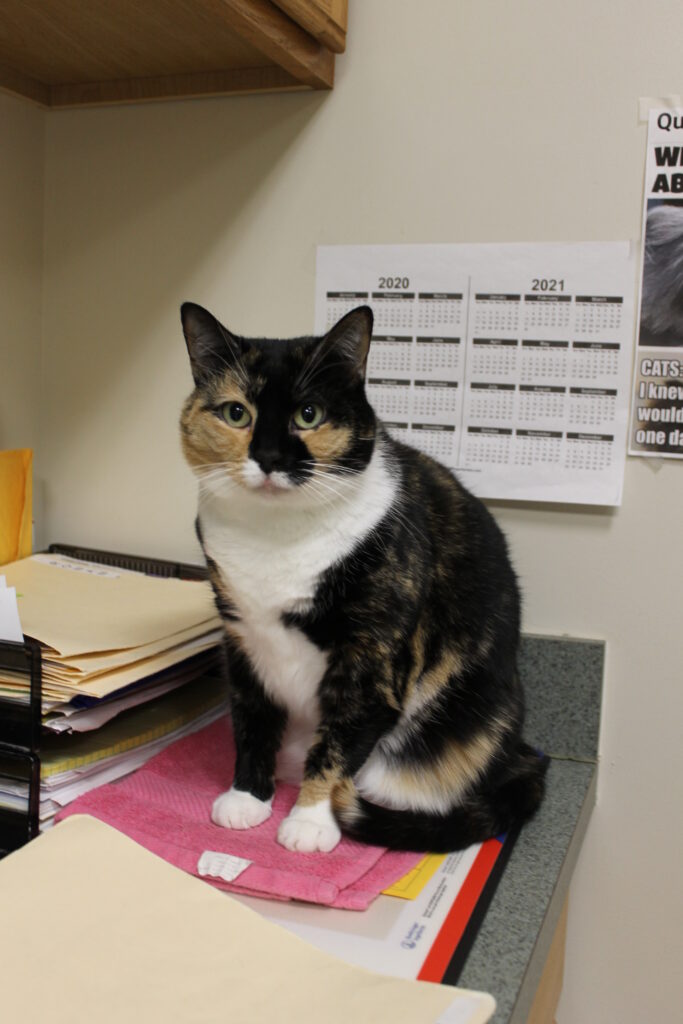
  • A calico cat with a black, orange, and white coat sits on a desk with papers. Behind the cat are a wall calendar for 2020 and 2021 and a poster partially visible on a beige wall.
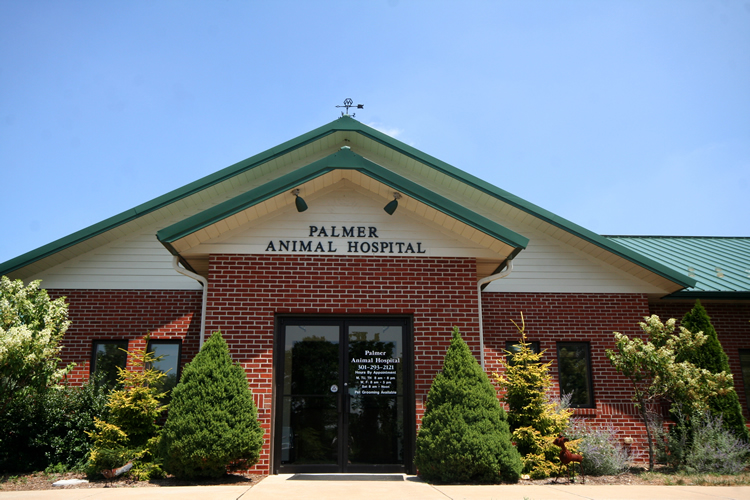
  • Front view of Palmer Animal Hospital, a red brick building with a green roof, white trim, and glass entrance doors, surrounded by green bushes and small trees under a clear blue sky.
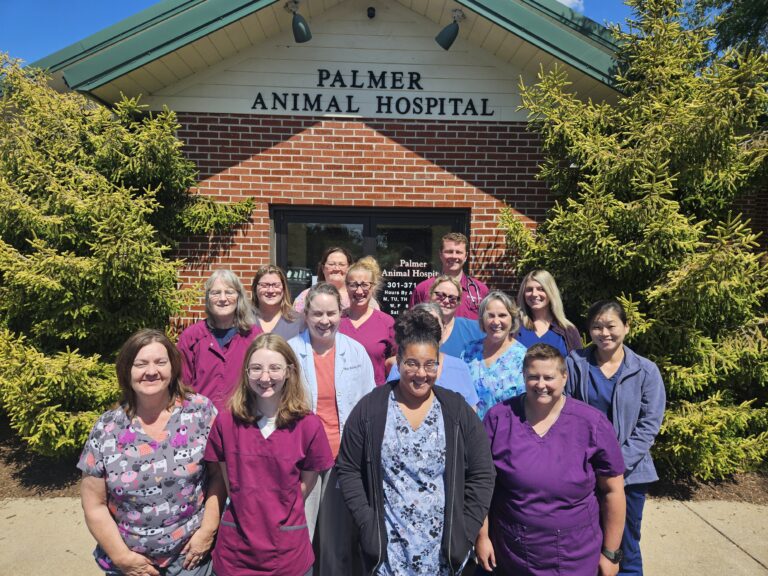
  • A group of people standing in front of a building.
Text reading “PALMER ANIMAL HOSPITAL” in bold white letters, surrounded by four white paw print graphics, one in each corner, on a black background.

Hours

Sunday: Closed

Monday: 8:00 am - 8:00 pm

Tuesday: 8:00 am - 8:00 pm

Wednesday: 8:00 am - 5:00 pm

Thursday: 8:00 am - 8:00 pm

Friday: 8:00 am - 5:00 pm

Saturday: 8:00 am - 12:00 pm

Helpful Links

  • Forms
  • Pet Record Portal
  • After Hours
  • South Mountain Standard Poodles
  • Contact Us

Contact

9405 Baltimore National Pike, Myersville, MD 21773, USA
info@palmeranimalhospital.net(301) 371-3333

© 2026 Palmer Animal Hospital · Website design by Datachieve Digital