• Skip to primary navigation
  • Skip to main content
Text reads "Palmer Animal Hospital" in large maroon letters, with four navy blue paw prints in each corner of the image. The background is white.

Palmer Animal Hospital

Veterinarian Myersville, MD

  • Home
  • Services
  • About
    • About Us
    • Veterinarians & Staff
    • South Mountain Standard Poodles
    • Testimonials
  • Forms
    • Client Registration Form
    • Sick Patient History Questionnaire
    • Questionnaire for Annual Well Pet Visits
  • News
  • After Hours
  • Contact Us
  • Pet Record Portal

admin

New Technologies in Veterinary Medicine

October 22, 2021 by admin

The veterinary medicine field has grown by leaps and bounds with the introduction of new technologies, allowing veterinarians to make a faster and more accurate diagnosis. New technologies have not only improved the outcome for many pets, but also made veterinary care more affordable for owners and accessible to patients. Now, more than ever before there is better health care available to patients in a general practice allowing veterinarians to better treat patients and ultimately increase the likelihood of a positive outcome. Here are some of those technologies available today.

Magnetic Resonance Imaging:

Magnetic Resonance Imaging or MRI uses magnetic fields and radio waves to create detailed images of organs and soft tissues within the body. MRI technology has been extremely impactful in examining the brains of animals as well as orthopedic and soft tissue damage in a variety of animals. MRI Scans are the main diagnostic tool for neurologists in finding brain and spinal cord injuries, brain tumors, head trauma, degenerative neurological conditions, examining the inner structures of the eye, and other parts of the nervous system.  In addition, getting MRI scans before orthopedic procedures can allow veterinarians to better pin point the location of an injury and improve the chances of surgical success. While it can be positively used, animals must be under anesthesia as they have to be completely still for the technology to be successful.

Ultrasound:

A less expensive and more accessible option to MRI technology is ultrasounds. Ultrasound units use sound waves higher than the frequency humans can hear, to examine internal organs and tissues. Ultrasound technology is useful for a variety of purposes, most commonly to examine patients with heat murmurs or defects, and has become even more accessible with the introduction of small, portable ultrasound units.

3-D Printing:

3-D printing has recently been used to create bone structure or other internal structure models to better understand a patient’s anatomy prior to operating, and increasing the likelihood of a successful procedure. 3-D printing can also be used to create prosthetics and other structures to increase the quality of life of pets with severe injuries.

Recombinant DNA:

Recombinant DNA has allowed for several biotechnological advances including gene therapy, which allows veterinarians to help treat genetic diseases and abnormalities ailing their patients. In addition, a more complex understanding of rDNA has allowed for quicker, and increased production of many drugs and pharmaceuticals including insulin. This in turn has decreased the cost of those medications, making them more widely accessible to all pet owners.

Technology has already changed the veterinary medicine field in a matter of several years and will likely continue to do so in the future. More accessible technologies have allowed veterinarians to better diagnose, and more effectively treat patients with a variety of illnesses which in turn, has made them more accessible for clients and their beloved pets.
Filed Under: News

Rehabilitative Laser Therapy

October 1, 2021 by admin

Our pets are a large part of our lives, so it comes as no surprise that owners want their animals to feel their best. Rehabilitative laser therapy can serve as a noninvasive option and is useful in helping to treat a variety of injuries from sprains, strains, arthritis, swelling, back disc problems, muscular and skeletal abnormalities, and can also be used on incisions following surgery to promote healing of the area.

 Laser therapy has been used on humans for over 50 years, however, it is a relatively new practice in dogs, cats, and other animals. Cold therapy lasers also called low-level lasers or Class IV lasers use a light to stimulate cell regeneration and an increase in blood flow to tissues. Hot therapy lasers do the same but use a more high-powered light to reach deeper tissues and can come with a greater chance of cutting and burning the skin due to increased intensity of the laser beam if not used properly.

Laser therapy is becoming increasingly common in veterinary practices as a result of its non-invasiveness, and lack of side effects. Laser treatments last anywhere from 5 to 20 minutes depending on the body part being treated and are generally performed 2 to 3 times per week depending on the severity of the patient. Before patients receive a treatment, there is no prep work or shaving of the area, and the dog can return to normal activities after the treatment. The treatment is not painful, and many patients enjoy the treatment as it allows them to feel better.

Laser therapy can be a useful option for owners to use to treat injuries or arthritis causing discomfort to their animals as well as post-surgical procedures to help support their pet’s well-being and provide pain relief.

Filed Under: News

Intern Articles

October 1, 2021 by admin

This fall, we have an intern student working with us.   As part of her responsibilities, she will be posting articles of information and interest about twice a month, so keep watching here. This month starts with an article on Rehabilitative Laser Therapy.

Filed Under: News

PHONE ISSUES TODAY 09/23/21

September 23, 2021 by admin

Today we are having trouble with our phones lines where incoming calls are not reaching us.

Obviously this is a difficult situation as it is our major means of communication. We are working on this problem, but if you are not able to reach us by phone, you can always email us and we will get to you as soon as possible. We will also be texting our expected appointments so you can return texts to our computer system. Sorry for the inconvenience, but this is a problem from outside of our office that we are trying to get our service provider to resolve.

Filed Under: News

Ivermectin and COVID-19

September 10, 2021 by admin

    With the COVID-19 Pandemic still affecting our everyday lives, some people have turned to new and dangerous ways of preventing infection – the drug Ivermectin. Ivermectin has been prescribed to people in the past to treat minor infections of head lice, scabies, and other parasitic diseases. However, it is more commonly used in livestock animals for the control of worms as an anti-parasitic, and there is little to no research on its effects on the virus causing COVID-19. Even so, there has been a large increase in the number of prescriptions of ivermectin – from 3,600 per week prior to COVID-19, to 88,000 per week in mid-August – which have been used by people to supposedly protect themselves from the virus. In addition, calls to Poison Control Centers have jumped fivefold over the baseline in July, just from people ingesting Ivermectin from livestock supply stores. This is as a result of incorrect dosing, as most ivermectin doses are calculated for 1,000- or 2,000-pound animals rather than humans which are 1/10 of the weight. The large increase in the drug use has also led to shortages from manufacturers, affecting farmers who need the drug for their livestock. Trials have been done to test Ivermectin’s effectiveness in preventing the coronavirus, but they seem to have no effect on the disease. The largest trial, The Together Trail, was stopped during the study as Ivermectin was shown to be no different than a placebo in preventing COVID infection or reducing the duration and severity of symptoms. With this said, the FDA has not approved the use of Ivermectin for treating or preventing COVID-19, and it is not recommended to take the drug without the proper prescription from a doctor.

Filed Under: News

Memorial Day—May 31, 2021

May 30, 2021 by admin

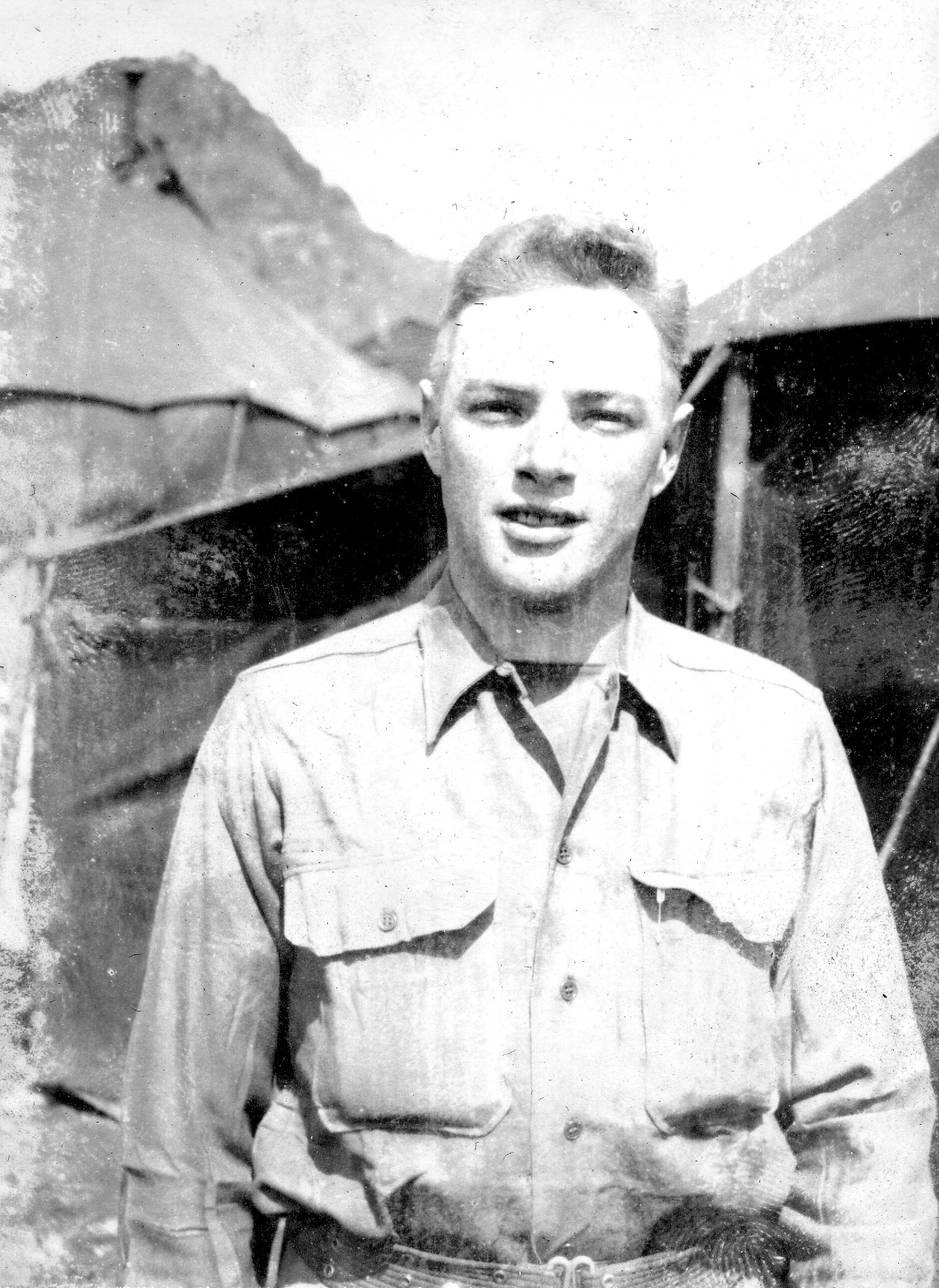
In honor of all of those who have served and protected our country over the years, our office will be closed for Memorial Day, Monday, May 31st, 2021.    We will reopen for regular business hours on Tuesday, June 1st.    We hope that all of our clients and staff have a safe and happy holiday.   In special remembrance of this day, I’m posting a picture of my father, Amos E. Palmer DVM, for his service days in Korea in 1950-51.


Amos E. Palmer 1930-1987

Filed Under: News

Oh No! More Snow (Feb 18, 2021)

February 17, 2021 by admin

This winter just seems to keep going on and on.   We are again expecting winter weather with significant snowfall beginning tonight, Feb 17th, and lasting potentially through Friday, Feb 19th.   If there is significant accumulation, the ability of our staff to travel into work will be limited, so our services may be limited.   If your pet has an appointment tomorrow, Thursday, Feb 18th, you need to call our office before coming here to be sure that  1) we are here, 2) we are open, and 3) that we are able to see your pet.   We try our best to offer the services our patients need, but the safety of our staff (and clients) is always our first concern.

Stay safe, and remember to call before coming in.

301-371-3333


Filed Under: News

Winter Weather Update: Feb 1, 2021

February 1, 2021 by admin

Hopefully everyone is staying safe during this current winter storm.   We are currently open today, Monday, Feb 1st, but due to more expected snowfall and freezing conditions, we will be closing early at 5PM today.  We expect to be open for business tomorrow, Tuesday, Feb 2nd depending on the weather and road conditions.    There may be a reduced schedule if our doctors and staff have difficulty traveling.   Before you come to our office for an appointment or to pickup medications, please call first to be sure we are open and able to provide service.

Philip Palmer, DVM

Filed Under: News

Winter Storm

January 31, 2021 by admin

We hope everyone is safe at home enjoying this white winter weather.    The snow is supposed to continue throughout the day tomorrow, Monday, Feb 1st.     We are unsure as to how much of our staff is going to be able to safely arrive at our office for work.   So please, be sure to call the office and talk to a LIVE staff member before coming for your appointment.   Hopefully, we will be there and be able to take care of your pets needs.   If we are not able to have staff arrive, then we will reschedule our appointments as quickly as possible.   So enjoy the snow, and stay safe!


Filed Under: News

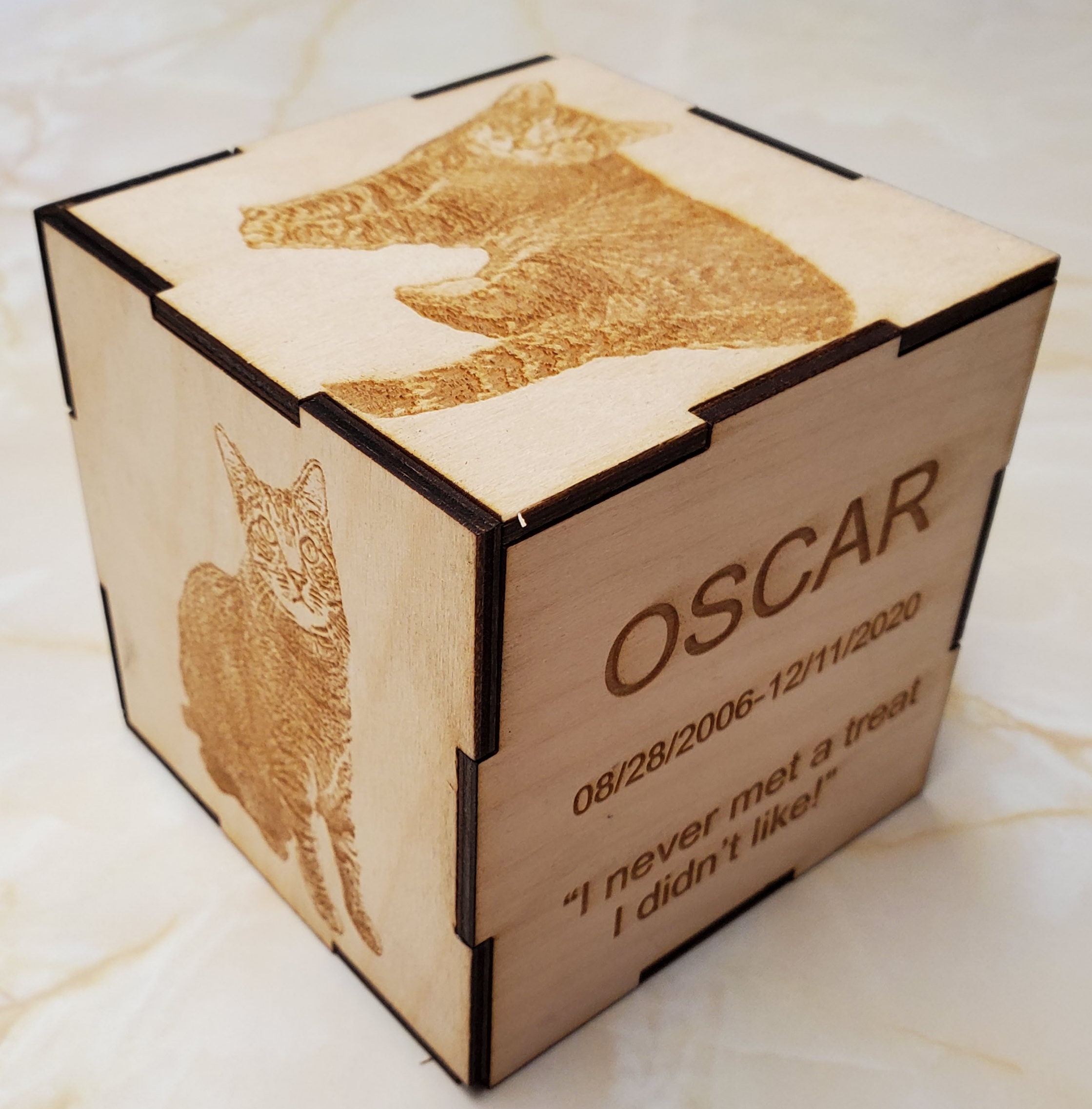
Oscar : Our Resident Hospital Cat 2006-2020

January 1, 2021 by admin

With COVID protocols in effect, we know that most of our clients have not physically been our office lately, and therefore do not know that we lost Oscar on Dec 11, 2020. He was our resident hospital cat for 14 years and dearly loved by the staff and clients alike. Most days you could find him sacked out on the front desk waiting for one of our staff to save him from “starvation” by giving him treats. Oscar had been having some health issues for a while and we are happy that we were able to keep him happy and going for as long as we did. There was not a dry eye in the office the day we had to let him go and he will be dearly missed.

Do not worry—Oscar will not be forgotten!!! We have made a special urn to remember him by and it will be at the front desk for some time.   When you are finally able to come into our office personally, please feel free to pay Oscar a little visit.   There will also be an LED memorial to him and Buttons (Oscar’s previous “boss” who left us in 2005).

Filed Under: News

  • « Go to Previous Page
  • Page 1
  • Page 2
  • Page 3
  • Page 4
  • Page 5
  • Page 6
  • Interim pages omitted …
  • Page 12
  • Go to Next Page »

Get in Touch

Contact Us
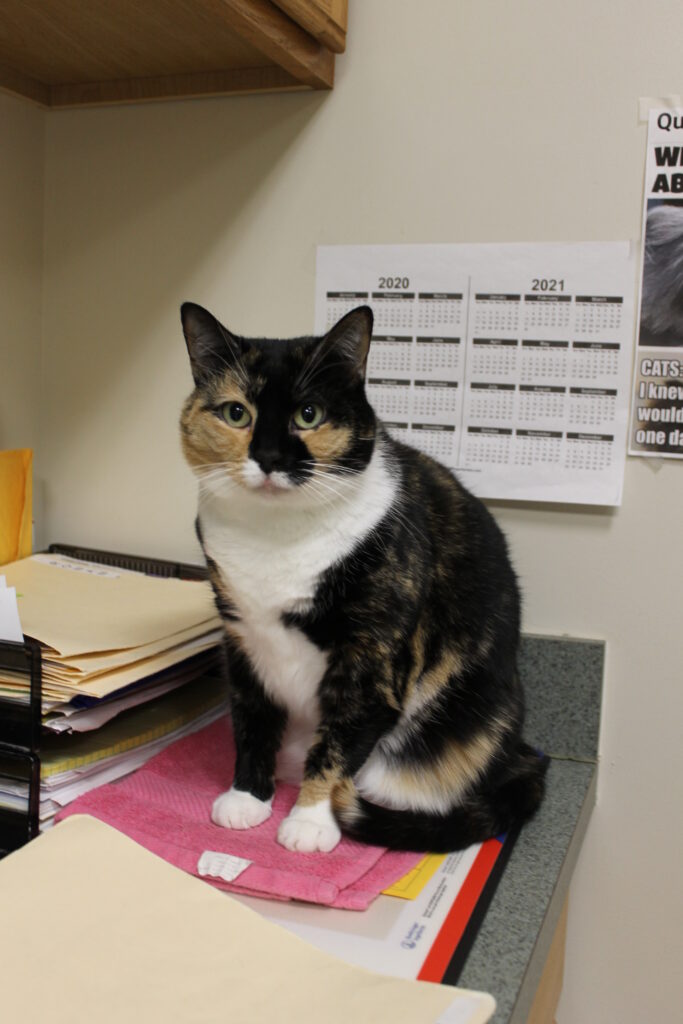
  • A calico cat with a black, orange, and white coat sits on a desk with papers. Behind the cat are a wall calendar for 2020 and 2021 and a poster partially visible on a beige wall.
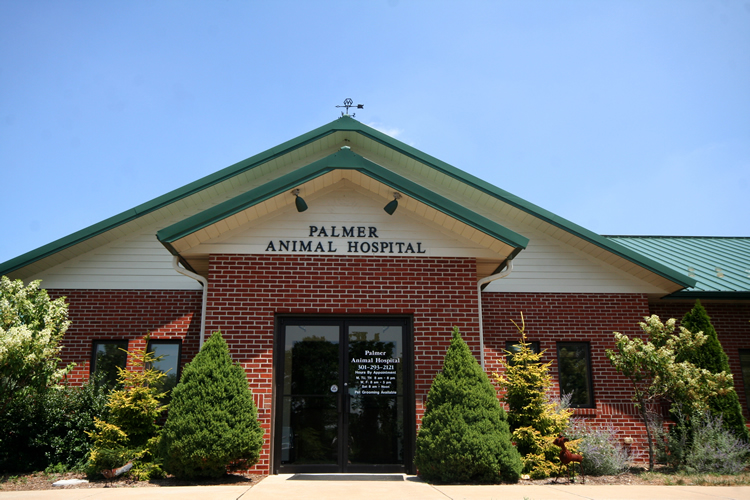
  • Front view of Palmer Animal Hospital, a red brick building with a green roof, white trim, and glass entrance doors, surrounded by green bushes and small trees under a clear blue sky.
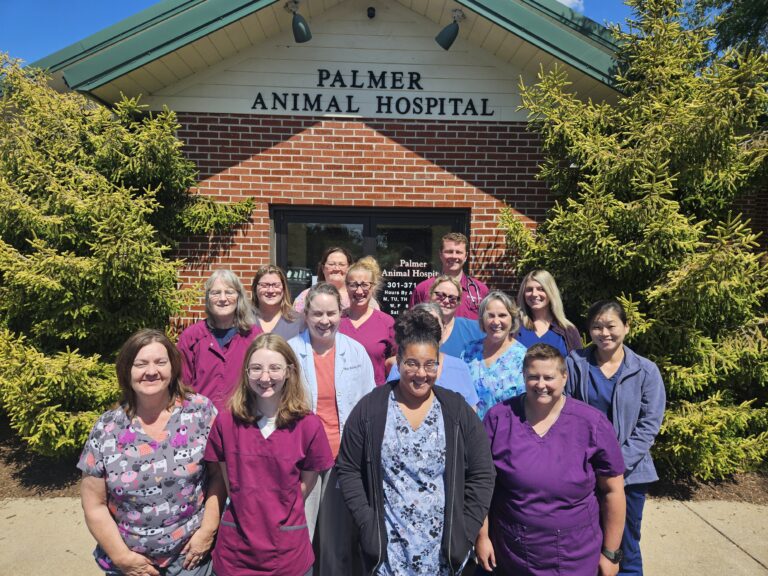
  • A group of people standing in front of a building.
Text reading “PALMER ANIMAL HOSPITAL” in bold white letters, surrounded by four white paw print graphics, one in each corner, on a black background.

Hours

Sunday: Closed

Monday: 8:00 am - 8:00 pm

Tuesday: 8:00 am - 8:00 pm

Wednesday: 8:00 am - 5:00 pm

Thursday: 8:00 am - 8:00 pm

Friday: 8:00 am - 5:00 pm

Saturday: 8:00 am - 12:00 pm

Helpful Links

  • Forms
  • Pet Record Portal
  • After Hours
  • South Mountain Standard Poodles
  • Contact Us

Contact

9405 Baltimore National Pike, Myersville, MD 21773, USA
info@palmeranimalhospital.net(301) 371-3333

© 2026 Palmer Animal Hospital · Website design by Datachieve Digital