• Skip to primary navigation
  • Skip to main content
Text reads "Palmer Animal Hospital" in large maroon letters, with four navy blue paw prints in each corner of the image. The background is white.

Palmer Animal Hospital

Veterinarian Myersville, MD

  • Home
  • Services
  • About
    • About Us
    • Veterinarians & Staff
    • South Mountain Standard Poodles
    • Testimonials
  • Forms
    • Client Registration Form
    • Sick Patient History Questionnaire
    • Questionnaire for Annual Well Pet Visits
  • News
  • After Hours
  • Contact Us
  • Pet Record Portal

admin

Raw Diets

December 18, 2013 by admin

‘RAW DIETS’

Recently we have been getting more and more questions about “Raw Diets” (Raw Meat-Based Diets–RMBDs) in our patients.  RMBDs are controversial, but the popularity of the diet such as raw meat, bones, fruit and vegetables, are rising. We do not recommend raw diets; in fact most veterinarians do not recommend them.  The AVMA, AAHA and Canadian VMA also discourage the use of undercooked or raw diets.  The Delta Society Pet Partners Program precludes animals that eat RMBDs from participating in their therapy animal programs.  The key motivation for pet owners wanting to feed these diets is that they are thought to be nutritionally superior compared to more conventional diets. Most of the information is from anecdotal or non-scientific studies.  It is important to understand that there are many risks associated with feeding these diets:

— Bacterial contamination especially Salmonella.  The occurrence rates of Salmonella in commercial RMBDs range from 20-48%. This not only puts your pet at risk for becoming ill, but any other animal or person in the household as well.  This by far is our major concern in regards to safety of these diets.

—Nutritional concerns—many of these diets are unbalanced.  A 2001 study found that all of commercial RMBDs and 95% of home-prepared RMBDs  had at least one major nutritional deficiency, so long-term feeding may lead to health problems with your pet.   Keep in mind that many of these diets are labeled for intermittent or supplemental feeding and are not intended as a long-term diet. 

—Other safety issues such as bones and high-fat levels in many of these diets can put pets at risk for stomach and intestinal injuries, and pancreatitis.

—Cases of Hyperthyroidism have been reported in dogs fed a RMBD (which resolved upon discontinuation of that diet).

For more information, there is an article in the Dec 1st issue of the AVMA Journal that discusses the current knowledge of the risks and benefits RMBDs.

Filed Under: News

Holiday Dangers to Your Pets

December 18, 2013 by admin

‘HOLIDAY DANGERS TO YOUR PETS’

  Christmas time, as we all know, is rapidly approaching.  Which means the decorating and other festivities are begining to take place as well.  The holiday times are a special time for us and our pets. With that said, all the ongoing activities and constant distractions, we seem to over look some possible dangers to your pets.  Knowing what could be dangerous to your pet’s and taking preventive measures to insure your pet is protected and safe from any harm, will help save you a trip to the vets office over the holidays!

  • Tinsel-  The shiny, dangling decoration that can be easily move in the slightest draft and reflects in light, can cause serious injury to your pets.  If not caught in time, it could easily become fatal as it bunches and twists inside your pet’s intestines. 
  • Ornaments-  Bright and colorful tree ornaments can attract the curiousity of your pets.  Place these ornaments, glass, aluminum and paper, all at the top of the tree or anywhere out of reach of the pet.  If the objects are swallowed by the pet, it can easily become a cocking hazard and an emergancy situation.
  • Electric Cords-  Electrical shock may occur when a pet chews down on an electric cord, causing irrtation to the tongue and possibly fatal.  Using a grounded three-pring extension cord is a safe move.
  • Candles-  Candles that are out on display should be placed in a hard-to-reach spot so that your pets can’t get to it.  Meanwhile, not only can this burn your pet but dripping wax can burn the pads of paws causing severe pain.
  • Ribbon-  Discard any ribbons and bows that are wrapped around holiday gifts, so that your pets won’t be tempted to chew or even swallow them.  If the ribbon where to be ingested, it causes a choking hazard and it twists throughtout the intestines, leading to an emergancy surgery.

 Taking precautions with pets during the holidays can help ensure that you, your friends and family will have a happy and healthy holiday season. 

Filed Under: News

INCLEMENT WEATHER POLICY

November 25, 2013 by admin

Wow, Thanksgiving is nearly here and they are calling for some cold, nasty weather in our area.   Now is a good time to review our Inclement Weather Policy.   While it is rare for us (or at least most of us) to make it into the office, I tell my staff that if there is any question as to whether they can SAFELY make it into work, to stay home and call the office to see what the situation is weather-wise.    So on those days when you wake up with the ground covered in white, the best advice I can give our clients is to CALL THE OFFICE BEFORE YOU COME IN.  Staff is usually in at 7:30, so if you don’t get a live person please leave a message and we will call you back.     There are also rare occassions when the daytime weather becomes so nasty that we will close early.   In those cases we contact all of our appointments and in-house cases to let them know the status.  If you can’t make it in to pickup your pet, don’t worry—we can hold onto them until it is safe to pick them up.

Filed Under: News

HOLIDAY HOURS

November 25, 2013 by admin

Our schedule for the upcoming holidays are:

THANKSGIVING:

Wed, Nov 27th 8AM-5PM (Regular hours)

Thursday, Nov 28th:  THANKSGIVING DAY—- CLOSED

Friday, Nov 29th 8AM-5PM (Regular hour)

CHRISTMAS:

Tuesday, Dec 24th     8AM- 12 Noon (1/2 day)

Wednesday, Dec 25th   CHRISTMAS DAY — CLOSED

Thursday, Dec 26th  8AM-8PM (Regular hours)

NEW YEARS:

Tuesday, Dec 31st   8AM-5PM   (Short day)

Wednesday, Jan 1st  NEW YEARS DAY — CLOSED

Thursday, Jan 2nd  8AM-8PM  (Regular hours)

Have a safe and happy holiday season!


Filed Under: News

Thanksgiving Foods That Should Be Kept Out Of Reach

November 22, 2013 by admin

‘THANKSGIVING FOODS THAT SHOULD BE KEPT OUT OF REACH’

   Thanksgiving is a time of being thankful, of spending time with family and friends and of course, the food.  With that being said, if you, your family, or your friends, have animals in the house, make sure that the only thing they eat are safe and healthy.  We do not recommend giving table scraps to our pets at all, but to really keep things safe, here are some Thanksgiving Day food favorites to avoid as they can be harmful to your pet;

  • Turkey skin-  High fat foods, can become extremely hazardous to your pets health, such as the turkey skin.  High fat foods can cause pancreitis in pets.  Symptoms include stomach pains, vomiting, and lethargy.


  • Cooked bones-  Cooked turkey or ham bones are NOT safe for pets at all.  They can splinter in the pets digestive tract and become extemely deadly to your pet.  Make sure that you dispose of the bones carefully and our of reach so your dog doesnj’t find a way to get into it.   We have had to surgically remove bones from both dogs and cats, so please keep them away from your pet!


  • Onions and garlic-  Sulfides and contained in onions and garlic, which are toxic to dogs and could lead to anemia. Cooking them dos not decrease the toxicity.


           Chocolate-  We all know chocolate is a HUGE no-no for dogs.  Chocolate can be toxic for your dog, and not only will it cause GI upset, but high doses can cause overstimulation of the nervous system

  • Dough & batter- Dough and batter can actually rise in your dog’s stomach leading to bloating and abdominal pains.  We also know that dough and batter both contain raw eggs, which leads to Salmonella.  So, just be cautious of this and make sure your pet isn’t around while you’re baking and clean up any spills immediatly.

Filed Under: News

Regulations on Pet Food

November 13, 2013 by admin

REGULATIONS ON PET FOOD

   The FDA  has proposed rules to prevent food-borne illnesses in animal feed and pet food.  The proposal is in response to numerous cases of contaminated pet food over the past decade.  The most current incident was the loss of hundreds of animals linked to contaminated jerky treats.  If the regulated proposal is put into effect, the manufacturers of animal food in the United States will be required to have written protocols to prevent food-borne illnesses.  The food producers would also have to be able to recognize critical points in the manufacturing process where the danger of contamination is the highest, and maintain protective procedures at those susceptible points.    In addition, the rules would require producers to re-evaluate the safety process every three years.  If problems arise, their contamination protection will need to be altered as needed.  Manufacturers who do not fulfill these standards would be subjected to actions by the FDA that includes a warning letter, consumer advisories to avoid those products, and potential fines. 

    In order to reduce the riskes your pets diet, at Palmer Animal Hospital we recommend;

           — Only buying well known name brands

           — Avoiding imported products (especially jerky treats)

           — Buying products that were manufactured in the United States only!

Filed Under: News

Preventing Obesity in Your Dog

November 8, 2013 by admin

PREVENTING OBESITY IN YOUR DOG

    In order to prevent long-term health problems in your dog, you need to keep them at a healthy weight.  Obesity can lead to serious and expensive health problems in the future,  including heart disease, diabetes, and orthopedic injuries that will require surgery.  Obesity can take 2 years off your dog’s life, so managing your dog’s weight is crucial to his well-being.  The main cause of obesity is simple: the dog takes in more enegy than it burns.   Adjusting your dog’s caloric intake and increasing exercise can result in a healthy weight.

   Gradual weight gain may be difficult to notice because you see your dog every day.  The best way to determine whether or not your dog is overweight is to talk to your veterinarian, who can provide you with an ideal weight for your dog.  One way to check at home is to pat your dog along its sides–you should be able to feel the dog’s ribs.  If the dog’s ribs are covered by fat, the dog is probably overweight.  Finding out that your dog is a couple pounds overweight may not sound alarming, but those two pounds are putting significant stress on your dog’s joints and organs.  Keep in mind that 2 pounds on a dog is like 20 pounds on a person.  Being aware of weight and prioritizing weight control will lead to a happier and healther life for your dog!

   Our recommendations for controlling your dog’s weight:

        —feed an appriopriate calorie  food for your dog’s body condition; many dog’s will benefit from low-calorie/weight-control diet

         —be sure to measure out the appropriate amount of food each day/meal and not offer “free-choice” feeding

          —limit snacks and treats as they can add up to a lot of calories very quickly

           —be sure your dog gets plenty of exercise

            —if you are concerned about your dog’s weight, be sure to ask our opinion the next time you are in with your pet.


Filed Under: News

HAPPY HALLOWEEN!

October 31, 2013 by admin

HAPPY HALLOWEEN!BLACK CATJessicatHAPPY HALLOWEEN!

Filed Under: News

Protect Your Pet Over Holidays

October 31, 2013 by admin

‘PROTECTING YOUR PET OVER THE HOLIDAYS’

As the holidays approach, remember that this can be  a dangerous time of the year for our pets.  The winter holidays are the number one time of the year that pets are usually lost. So take some extra holiday recautions;

Holiday Foods- Candy, chocolate,  bones, turkey and fixings, pork, and fish should be kept away and out of reach from your pets. Never give your pet chocolate. It is highly toxic to animals, causing stomach aches, constipation or diarrhea.  Keeping your pet on its regular diet is the best option.

Holiday Deorations- Electric cords, tinsel, glass ornaments, candles, ribbons, plastic or wrapping are all dangerous to your pet.  Hide or cover up electric cords to prevent cats from chewing on them or wrapping around it.

Cold Weather- It’s the time of year to prepare for colder weather, and the changes it brings with.  Pets are naturely prepared for winter, still with some precautions that are necessary.  Letting your pet run freely during this time of year can be dangerous for your pet.  It becomes a lot easier for the pet to become lost and they can easily freeze to death.  Therefore, it is crucial to the following precautions.;

  • Always clean snow and ice from your pet to prevent frostbite.
  • Observe your pets behavior frequently.
  • Feed smaller portions and feed more often as well as making sure fresh water is always available.
  • Allow indoor pets outside long enough to go to the bathroom and that’s it.
  • Supervsion is alwso important when letting your pet outside.

Filed Under: News

Microchips

October 15, 2013 by admin

MICROCHIPS

   Dogs and cats have a highly curious nature, which has the tendency to make wandering common.  There are many factors, such as looking for food or a mate, that could potentially give a dog or cat the motivation to escape from the home.  One in three dogs becomes lost and does not know how to find his way back home.  Each year, millions of lost and abandoned pets are taken in by animal welfare organizations and very few are reunited with their owners.  The main reason why these animals are not returned is that they are unidentifiable.  Think about having your pet microchipped to prevent them from becoming a statistic. 

   A microchip is a unique intergrated circuit that your veterinarian can implant under the skin.  It is a small device, about the size of a grain of rice. The prodecure for implanting a microchip is similar to an animal receiving a vaccination.  After your pet is microchipped, you need to register your information with the microchip company so that they can contact you in case of an emergency.  When your pet is scanned by an animal shelter or veterinary hospital,  his individual number is displayed on a screen.   That number can be linked back to you as the owner, and the microchip company will call and inform you where your pet has been found.   If you want to improve your pet’s chances of getting home in an emergency, microchipping is the best option.

Please feel free to give us a call if you have any further questions about microchips.

Filed Under: News

  • « Go to Previous Page
  • Page 1
  • Interim pages omitted …
  • Page 7
  • Page 8
  • Page 9
  • Page 10
  • Page 11
  • Page 12
  • Go to Next Page »

Get in Touch

Contact Us
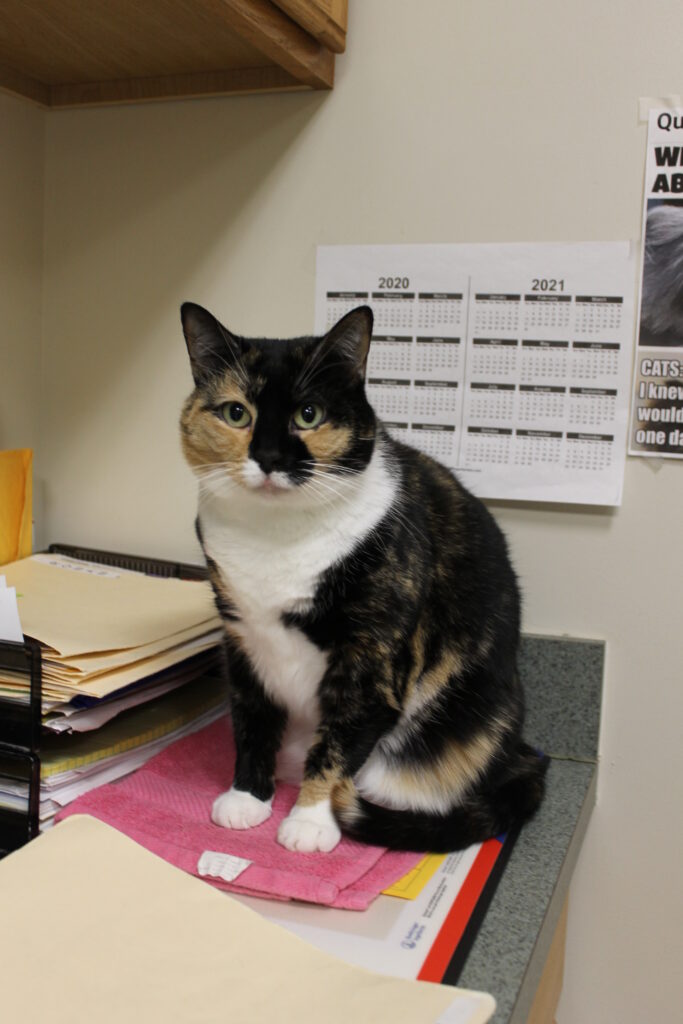
  • A calico cat with a black, orange, and white coat sits on a desk with papers. Behind the cat are a wall calendar for 2020 and 2021 and a poster partially visible on a beige wall.
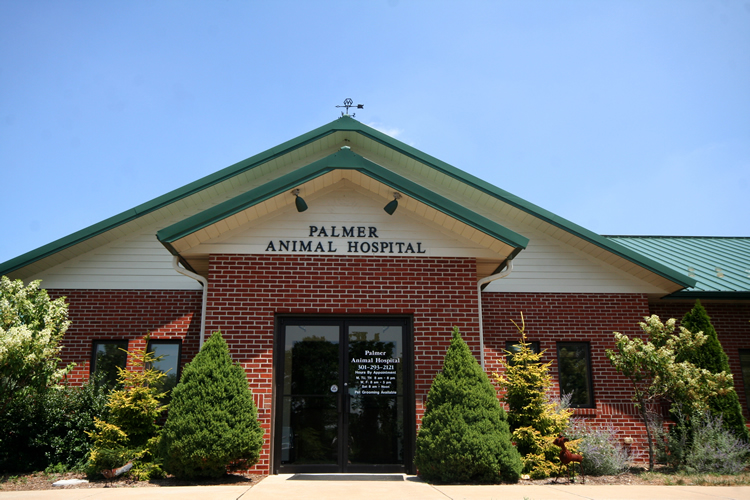
  • Front view of Palmer Animal Hospital, a red brick building with a green roof, white trim, and glass entrance doors, surrounded by green bushes and small trees under a clear blue sky.
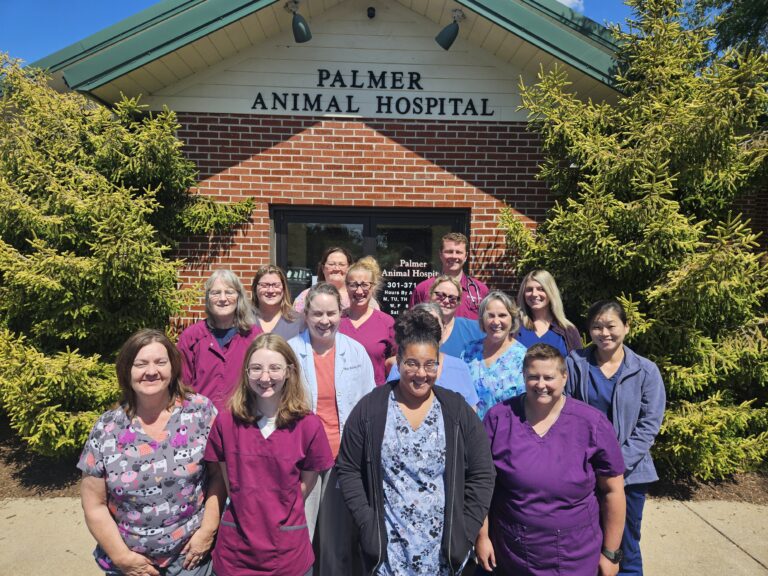
  • A group of people standing in front of a building.
Text reading “PALMER ANIMAL HOSPITAL” in bold white letters, surrounded by four white paw print graphics, one in each corner, on a black background.

Hours

Sunday: Closed

Monday: 8:00 am - 8:00 pm

Tuesday: 8:00 am - 8:00 pm

Wednesday: 8:00 am - 5:00 pm

Thursday: 8:00 am - 8:00 pm

Friday: 8:00 am - 5:00 pm

Saturday: 8:00 am - 12:00 pm

Helpful Links

  • Forms
  • Pet Record Portal
  • After Hours
  • South Mountain Standard Poodles
  • Contact Us

Contact

9405 Baltimore National Pike, Myersville, MD 21773, USA
info@palmeranimalhospital.net(301) 371-3333

© 2026 Palmer Animal Hospital · Website design by Datachieve Digital